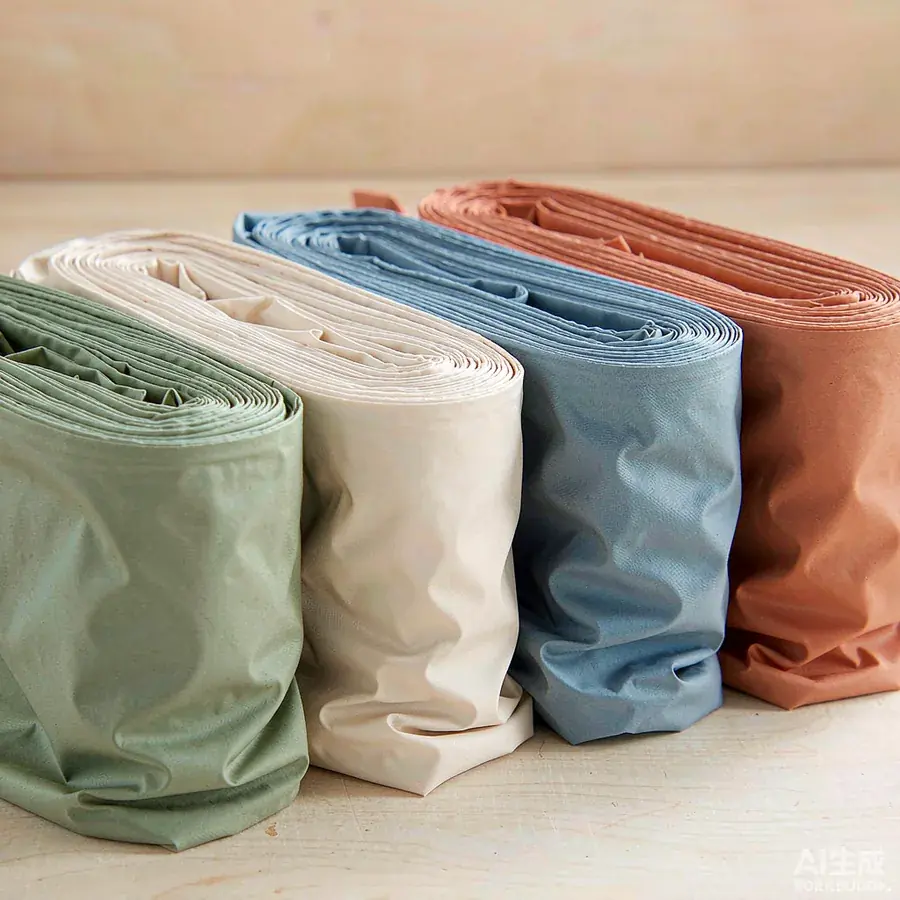
Dyed range
Dyed Polyester Fabric
Solid-colour polyester fabric dyed on our own lines, from 65 to 150 gsm.
View rangeMost fabric orders that go wrong were not badly produced — they were badly specified. This is the checklist we would use ourselves if we were buying from an unfamiliar mill.

A fabric order has four clock-starts: the enquiry, the lab dip approval, the bulk approval, and the shipment booking. Every delay downstream is usually traceable to one of the first three, and almost all of them are avoidable with a written checklist.
Minimum order quantity is not one number. It is the sum of three separate minimums: the minimum run per colour, the minimum per print design, and the minimum that makes the loom or the dyeing machine economical.
This is why a "3,000 m MOQ" can still mean 9,000 m for a three-colour programme. Ask for the MOQ broken down by colour and design before you build a range plan around it.
A lab dip is a small piece of fabric dyed to your colour standard; a strike-off is a small piece printed to your artwork. Both exist so that you approve the real thing on the real substrate before 20,000 m are produced. Approving a colour on screen, or on a different fabric, is the most common cause of a rejected bulk shipment.
Approve under the light your customer will see the product in — D65 is the usual standard for retail. And keep the approved sample: it is the only reference that settles a dispute six months later.
| Stage | Typical duration |
|---|---|
| Quotation and specification | 1–3 days |
| Sample / lab dip / strike-off | 5–10 days |
| Sample transit to buyer | 3–5 days (courier) |
| Buyer approval | 2–7 days (often the slowest step) |
| Greige weaving | 7–15 days |
| Dyeing or printing | 7–12 days |
| Finishing and inspection | 3–5 days |
| Packing and container loading | 2–4 days |
A "25-day lead time" normally counts from approval, not from enquiry. End to end, a first order realistically takes 45–60 days including sampling and shipping. Plan the retail launch backwards from that, not from the production figure alone.
A quotation with no specification attached. If the price arrives without construction, width and tolerance, it is not comparable to any other quote.
Reluctance to send a physical sample. Photos are marketing; samples are evidence.
Vague answers on width. "About 280 cm" means the mill does not want to commit to a usable width — and that is exactly the number you need.
A lead time quoted from enquiry rather than approval. It sounds faster and it is always wrong.
We quote with a written specification sheet, send running samples in the production width, and state lead time from approval. If a requirement falls outside what we can do well, we will say so at the quotation stage rather than after the deposit.
Solid-colour polyester fabric dyed on our own lines, from 65 to 150 gsm.
View rangeSend the product you are working on and the numbers you are unsure about. Technical answers come from the team that runs the orders.